Rolex Watch Lookup: Check Serial Number and Theft
Run a Rolex watch lookup by finding the serial number, checking theft databases, and verifying authenticity before you buy, sell, or insure.
StolenWatch Team
Watch Authentication Specialist at StolenWatch
Run a Rolex watch lookup by finding the serial number, checking theft databases, and verifying authenticity before you buy, sell, or insure.
A Rolex watch lookup means finding the serial number, checking whether it has been reported stolen, and confirming the watch matches its papers and model details. If you already have the serial number, run a stolen watch search before you buy, sell, insure, or service the Rolex — or see our Rolex serial number lookup guide for where both numbers are located and what they can (and can't) confirm.
Rolex Watch Lookup: Serial Number Look Up and Theft Check
If you are here to do a quick Rolex serial number look up, use this order:
- Find the serial number on the rehaut or between the lugs.
- Run the number through a stolen watch lookup.
- Compare the serial with the watch, box, papers, and seller photos.
- Stop the deal if anything does not match.
This page is built to answer the exact question buyers ask most often: whether a Rolex watch lookup shows a clean serial number history or a theft flag.
Why a Rolex Serial Number Lookup is Non-Negotiable
In the world of high-end watches, a Rolex is more than just a way to tell time; it's a serious asset. That value, unfortunately, makes them a magnet for thieves. The pre-owned market can be a bit of a minefield, and a stunning watch might have a dark history you can't see on the surface. This is exactly why a proper Rolex serial number lookup is so critical.
The main goal is simple: confirm the watch has a clean history and protect yourself from a massive headache. Imagine finally getting your hands on that vintage Submariner you've been dreaming of, only to find out months later it was stolen a decade ago. Best case scenario, the watch gets confiscated, and you're out the entire purchase price. It’s a nightmare scenario that happens more often than you'd think.
The Sobering Reality of Watch Theft
The scale of luxury watch theft is truly staggering and it's only getting worse. In 2022, over £1 billion ($1.3 billion) worth of watches were reported stolen across the globe. That's a massive 60% jump from the year before. And which brand was the top target? Rolex, making up a whopping 44% of all stolen watches. If you want to dive deeper into the numbers, Fortune's report on luxury watch theft lays it all out. These aren't just statistics; they're a clear warning sign for anyone in the market.
Your First Line of Defense
This is where a specialized service like StolenWatch becomes an essential tool in your arsenal. It acts as a global, centralized database where anyone—buyers, sellers, pawn shops, even police—can check a serial number against records of watches that have been reported stolen.
A serial number lookup is the single most effective action you can take to verify a watch's legitimacy before money changes hands. It transforms an uncertain transaction into an informed decision.
Making this check a routine part of your due diligence doesn't just protect you. It helps create a safer, more transparent market for everyone. It's about taking a simple, proactive step to shut down the trade of stolen goods.
For the quickest path, start with the stolen watch lookup, then review Rolex-specific theft records on the stolen Rolex watches page. If you are choosing a registry, compare coverage in StolenWatch vs The Watch Register.
 Hands opening a green Rolex box to reveal a luxurious silver and black watch, with colorful watercolor splashes.
The platform is built to be straightforward. You just need the serial number to quickly cross-reference a watch’s history. When you make this a standard part of every transaction, you’re not just being a smart buyer or seller; you’re actively contributing to the integrity of the entire watch community.
Finding Your Rolex Serial and Model Number
Before you can dig into a Rolex's past, you need its unique identifiers. Every authentic Rolex has two key numbers engraved on it: a unique serial number, which is like its fingerprint, and a model number (often called a reference number) that tells you its specific design. Getting your hands on these is the absolute first step in checking out a watch’s history and proving it's the real deal.
Where you'll find these numbers depends entirely on when the watch was made. Rolex has switched things up over the years, so knowing the era of the watch tells you where to look.
Here's a quick reference table to make it easy.
Rolex Serial Number Locations by Era
This table is your cheat sheet for quickly finding the serial number on a Rolex based on its approximate production period.
| Production Era | Serial Number Location | Model Number Location |
|---|---|---|
| Modern (Late 2008-Present) | Laser-engraved on the rehaut (inner metal ring) at 6 o'clock. | Engraved on the rehaut at 12 o'clock, but also on warranty card/papers. |
| Transitional (2005-2008) | Engraved on the rehaut at 6 o'clock AND between the lugs at 6 o'clock. | Between the lugs at 12 o'clock. |
| Vintage/Older (Pre-2005) | Engraved on the case between the lugs at 6 o'clock. | Engraved on the case between the lugs at 12 o'clock. |
Knowing where to look is half the battle. Now, let's get into the specifics of what that means for your watch.
Locating Numbers on Modern Rolex Watches
If you're looking at a Rolex made from late 2008 on, your job is pretty easy. The company started laser-engraving the serial number right on the inner bezel ring that frames the dial. That ring is officially called the rehaut.
Just tilt the watch in the light and look through the crystal at the 6 o'clock position. You should be able to spot the engraving without any special tools. While the model number is on the warranty card, the serial number on the rehaut is what you'll need for any kind of lookup.
Finding Numbers on Vintage and Older Models
Things get a bit more involved with older Rolexes, especially those produced before 2007 or so. Back then, Rolex engraved both numbers directly on the watch case, tucking them away beneath the bracelet.
- The Serial Number is nestled between the lugs at the 6 o'clock side.
- The Model Number is in the same spot, but on the 12 o'clock side.
To see these, the bracelet has to come off. This is a delicate operation. One wrong move and you can put a nasty scratch on a beautifully polished lug. You really need the right tool for the job—a quality spring bar tool with a fine, forked tip is a must. If you've never done it before or don't have the tool, it's always smarter (and cheaper) to let a professional watchmaker do it for you.
Expert Tip: Whatever you do, don't try to pry the bracelet off with a screwdriver or a knife. The risk of a deep, expensive scratch is just too high. A proper spring bar tool is a small investment that can save you a world of hurt.
With the bracelet safely removed, you'll see the crisp engravings. That serial number is your ticket to finding the watch's production date and checking its history against theft databases. The model number is there to confirm the watch is what it claims to be.
Once you’ve successfully located these numbers, you’re ready to move on. For a closer look at what all these numbers mean, our guide on certificate verification is a great next step.
How to Run a Stolen Watch Check
Once you have the Rolex's serial number, it's time for the most critical part of the whole process: running a background check. This isn't just a casual suggestion; it's an essential step to protect yourself from buying a stolen watch or to prove the clean history of one you're selling. The idea is to get a clear picture of the watch's story before any money changes hands.
This quick flowchart shows you exactly where to find the numbers you need on both modern and vintage Rolex models.
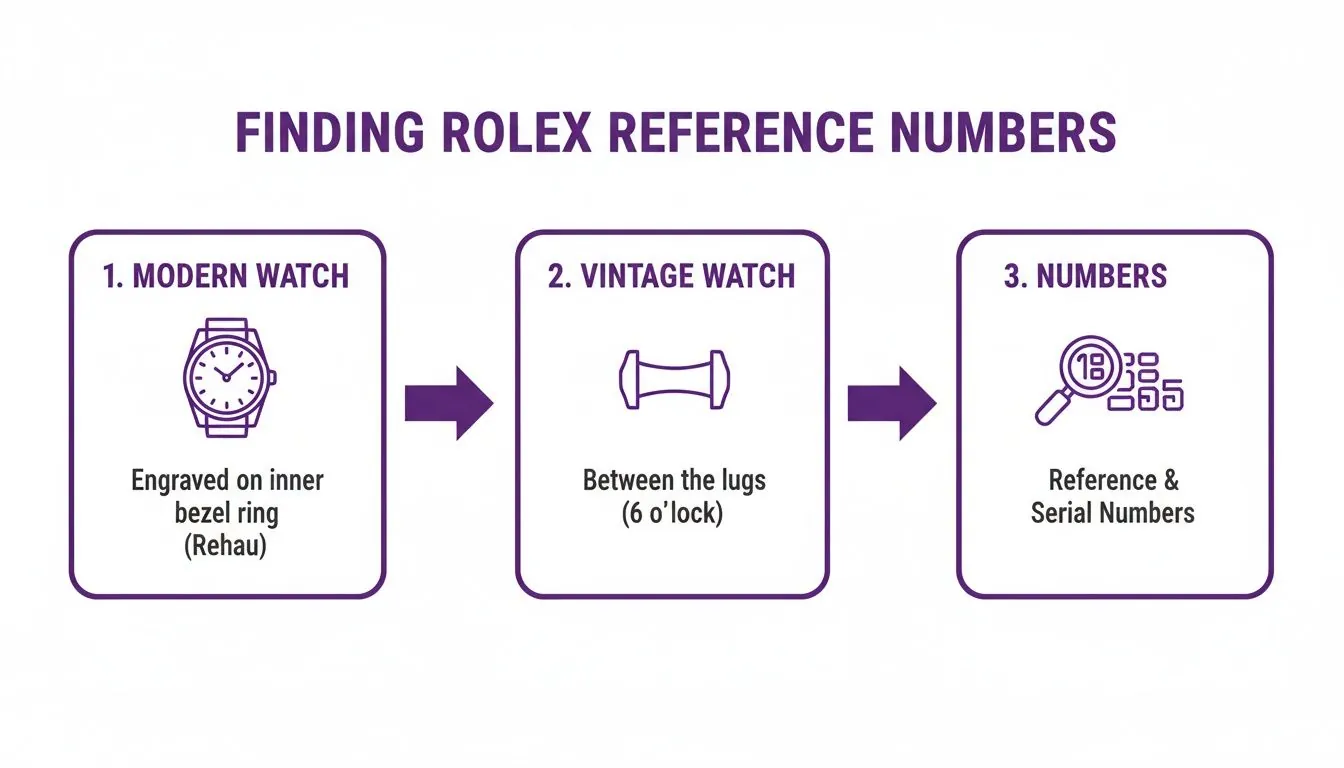 Flowchart showing how to find Rolex reference and serial numbers on modern and vintage watches.
As you can see, knowing the watch's approximate age is key—it tells you whether to check the rehaut ring or between the lugs at the 6 o'clock position.
Performing the Rolex Watch Lookup
The most direct way to check a watch’s status is to use a dedicated database. A platform like StolenWatch is built specifically for this, acting as a global registry for lost and stolen timepieces. The process itself is thankfully simple, whether you're a seasoned dealer or a first-time buyer.
Just head over to their search page and type the full serial number into the search field. Be meticulous here—a single wrong digit can give you a false result. After you submit it, the system scans its massive database of reported stolen watches.
You can start a rolex watch lookup right now by using the StolenWatch search tool.
How to Interpret the Search Results
The results you get will be pretty clear-cut, usually falling into one of two buckets. Knowing what each one means is vital for deciding what to do next.
- No Match Found (Clear): This is the outcome you want. It means the serial number isn't currently listed as stolen in the database, offering a huge dose of confidence, especially if you're the buyer.
- Match Found (Hit): This is a serious red flag. It means the serial number is a direct match for a watch that has been officially reported as stolen by its rightful owner.
If you get a "hit" on a watch you're about to buy, the advice is simple and non-negotiable: walk away. Don't ask questions, don't negotiate—just end the conversation. Proceeding means you'd be knowingly purchasing stolen property.
A clear report is a fantastic sign, but remember it’s just one piece of the puzzle. A full authenticity check is still a must.
Why These Databases Are More Important Than Ever
Running these checks is no longer just a "nice-to-have"—it's an industry standard. The great news is that recovery rates for stolen luxury watches are climbing, and it's almost entirely because of these databases.
As of mid-2025, The Watch Register reported identifying 607 lost luxury watches in only six months—a 26% jump from the year before—and managed to get 87 of them back to their owners. Nearly all of those recoveries started with a dealer, pawnbroker, or a sharp private buyer running a routine serial number check.
This just goes to show that doing your due diligence isn't only about protecting yourself; it’s a community effort that helps shut down the market for stolen goods. You can read more about the ongoing challenge of luxury watch theft on Insurance-Edge.net.
Spotting Red Flags Beyond the Serial Number
Getting a clean serial number check is a great first step, but don't stop there. The reality is, the most cunning counterfeiters know how to get their hands on legitimate serial numbers and slap them onto fakes. This is exactly why a hands-on physical inspection is just as critical as any digital rolex watch lookup. It's time to put on your detective hat and scrutinize the tiny details that separate a genuine Swiss masterpiece from a well-made replica.
 Two luxury Rolex watches, a magnifying glass, and precision tweezers on a white watercolor background.
This process isn't just about spotting fakes; it's also about identifying a "Frankenwatch." These are watches assembled from a mishmash of parts—some genuine, some aftermarket. While it might have a real Rolex movement, the rest could be from anywhere. It's not technically counterfeit, but its value is drastically lower.
Let’s get into what you should be looking for, both on the watch itself and with its accompanying documents.
Inspecting the Watch Itself
Your own eyes and hands are your most powerful tools. Counterfeiters have gotten good at mimicking the overall look, but they almost always fall short on the finer points that define Rolex's legendary craftsmanship.
Here’s what to check:
- Weight and Feel: The first thing you'll notice when holding a real Rolex is its heft. It feels substantial and solid, a direct result of the high-grade 904L steel and precious metals Rolex uses. If a watch feels light, flimsy, or cheap, trust your gut. That’s a massive red flag.
- The Second Hand Sweep: This is a classic tell. A genuine Rolex movement makes the second hand glide in a smooth, sweeping motion. You'll see tiny, almost imperceptible ticks if you look closely, but it appears to be a fluid sweep. Most counterfeits use cheap quartz movements, resulting in a distinct and jerky "tick-tick-tick" motion.
- The Cyclops Lens: Zoom in on the date window. Rolex's famous Cyclops lens provides a powerful magnification of exactly 2.5x, making the date jump out and fill the entire window. Fakes almost never get this right; their magnification is often weak (more like 1.5x), blurry, or distorted.
- Dial Printing: Grab a loupe or use your phone's camera to get a close-up look at the dial. On an authentic piece, all the text—the brand name, the model, the "Superlative Chronometer" script—is perfectly crisp, with sharp edges and a slightly raised feel. Counterfeits often have flat, blurry, or smudged printing with uneven spacing between letters.
A great tip for older models is to check the green holographic sticker on the case back. An authentic one has a true 3D effect, showing the Rolex crown and reference number that shift as you tilt it. Most fakes just use a simple flat green sticker that looks cheesy in comparison.
Scrutinizing the Box and Papers
The paperwork that comes with a Rolex is far more than just a receipt—it's the watch's passport. Authentic papers add immense value and are a cornerstone of its provenance. While forgers try their best to replicate these documents, they often make mistakes.
Consistency is everything here. The serial and model numbers engraved on the watch must perfectly match the numbers printed on the warranty card or certificate. Even a single digit being off is an immediate deal-breaker.
Beyond the numbers, feel the quality of the documents. Real Rolex paperwork is printed on premium cardstock and has a substantial feel. The printing is flawless. Forgeries, on the other hand, might have fuzzy text, obvious spelling mistakes, or be printed on flimsy, cheap paper. Take a moment to check the dealer's name on the warranty card, too. A quick Google search can often confirm if it was a legitimate authorized dealer at the time of sale.
Think of it this way: the box and papers are the watch’s birth certificate. Every single detail needs to line up perfectly to prove its identity.
What to Do After Your Rolex Watch Lookup
Alright, so you've run the serial number, and the results are in. What now? Your next move depends entirely on who you are—the buyer, the seller, or the victim—and what that search turned up. Having a clear plan is key to protecting your money, your reputation, and your watch.
Next Steps for Potential Buyers
Let's say you're about to pull the trigger on a new-to-you Rolex. You run the lookup, and it comes back flagged as stolen.
The answer here is simple and non-negotiable: walk away immediately. Don't try to be a hero, don't ask for a sob story, and definitely don't try to "get a deal" on it. You'd be knowingly buying stolen property, and that road leads to serious legal and financial trouble. It's just not worth it.
Now, if the report comes back clean? That's great news. It's a huge green flag. But it's not the end of your due diligence. Think of it as passing the first major test. Your very next step should be a meticulous physical inspection, and if you can, get it in front of a trusted, independent watchmaker for a final blessing.
Guidance for Sellers and Current Owners
If you're selling a Rolex, a clean report from a database like StolenWatch is more than just peace of mind—it's a fantastic sales tool. I always recommend sellers run the check themselves before listing the watch. Providing those clear results to a potential buyer builds instant trust and shows you have nothing to hide. It makes justifying your price that much easier.
For anyone who currently owns a Rolex, the smartest move is a proactive one. Don't wait until it's too late. Registering your watch's serial number in a database before anything happens is a powerful layer of defense. It makes your watch a much harder target for thieves to offload if the worst should happen.
A Plan for Victims of Theft
Finding out your Rolex has been stolen is a gut-wrenching experience. It feels hopeless, but acting fast and smart can make a real difference.
The hard truth is that police recovery rates can be depressingly low. Take London, for example. Between January 2022 and July 2025, thieves made off with over 5,180 luxury watches. The Metropolitan Police managed to recover only 59 of them—a recovery rate of just over 1%. You can read more about these startling watch theft statistics from City A.M..
This is precisely why getting the word out to the secondary market is so critical. Reputable dealers, collectors, and pawn shops constantly check these databases. If you've been a victim, here’s what you need to do, in this order:
-
File a Police Report: This is your absolute first move. It's official, it creates a paper trail, and you'll need the report number for everything that comes next.
-
Call Your Insurance Company: If your watch was insured, get them on the phone right away to start the claims process.
-
Register the Theft Globally: Now it's time to fight back. This is how you create a digital tripwire for your stolen watch. Use a service like StolenWatch to report a stolen watch. Doing so alerts a worldwide network of professionals who might see it surface for sale.
Answering Your Rolex Lookup Questions
When you're dealing with pre-owned Rolex watches, a few key questions always seem to pop up. Whether you're a seasoned collector or a first-time buyer, getting straight answers is the only way to move forward with confidence. Let's tackle the most common queries that come up during the lookup process.
Can a Serial Number Tell Me Who Owned a Rolex Before?
The short answer is a hard no. Thanks to strict global privacy laws, there's no way to pull up a list of previous owners using just the serial number. Rolex and its authorized dealer network are locked down tight when it comes to customer confidentiality.
Think of a Rolex watch lookup on a platform like StolenWatch less as an ancestry search and more as a critical background check. Its real power is in confirming one crucial fact: has this timepiece been reported stolen? That's the single most important piece of information you need to ensure you're part of a legitimate transaction.
What if the Serial Number Is Damaged or Missing?
A missing, polished-down, or illegible serial number is a massive red flag. In fact, it's one of the biggest you'll ever see. In many places, it's actually illegal to intentionally remove or alter a serial number on valuable property, and it almost always screams "stolen" or "fake."
If you can't read the serial number clearly, it's an immediate deal-breaker. Don't let anyone convince you otherwise. While it's theoretically possible for a master watchmaker to restore a faint engraving, the risk is just not worth it. Walk away.
If the Report Is Clean, Does That Mean My Rolex Is Real?
This is a really important distinction to get right. A clean report from a stolen watch database confirms one thing: the serial number you checked has not been reported stolen on that network. It gives you confidence that the watch has a clean title, so to speak.
What it doesn't do is certify authenticity. Crafty counterfeiters have been known to engrave a valid serial number—copied from a real watch—onto a high-quality fake. This is precisely why a two-step verification process is the only way to go.
- Start with the digital check: Run the serial number through a stolen watch registry first to clear its history.
- Move to the physical inspection: Immediately follow up with a hands-on authenticity check, looking at the details we covered earlier in this guide.
For that final, bulletproof sense of security, nothing beats having a trusted, independent watchmaker open it up and give you the final word.
What Does a Rolex Watch Lookup Cost?
The price can vary. You might find someone on a forum willing to give you their two cents, but for a transaction involving thousands of dollars, you need a documented, professional check.
Services like StolenWatch make this kind of essential due diligence surprisingly affordable. And when you think about it, proactively registering your own collection is a tiny investment to protect an asset that could be a huge loss. It's always best to check the platform directly for their latest pricing on search and registration services.
Protecting your investment starts with being informed. StolenWatch provides the essential tools to verify a watch's history before you buy and to register your own collection for added security. Check a serial number or register your watch today.
Related Articles
View all
Register a Rolex Watch: Warranty and Theft Protection
Learn how to register a Rolex watch for warranty records, ownership documentation, theft reporting, and recovery steps if it is lost or stolen.
The Ultimate Stolen Rolex Watches Database Guide
Explore our guide to using a stolen Rolex watches database. Learn how to protect your assets, report theft, and recover your luxury timepiece.
Serial Number on a Watch: Missing, Polished Off or Not Matching?
What to do when the serial number on a watch is missing, worn, polished off or different from the papers, and how to record a readable serial before theft.