Your Guide to Watches Auctions Online and Spotting Fakes
Master watches auctions online with our expert guide. Learn to spot fakes, verify authenticity, and get the best deals on luxury timepieces.
StolenWatch Team
Watch Authentication Specialist at StolenWatch
Master watches auctions online with our expert guide. Learn to spot fakes, verify authenticity, and get the best deals on luxury timepieces.
Jumping into online watch auctions is like opening a door to a global treasure chest. It connects you with rare and vintage timepieces from literally anywhere in the world. This digital shift has made watch collecting more accessible than ever, but it also means navigating new risks—from clever fakes to misleading listings and the ever-present shadow of stolen goods.
The Thrill and Risk of Digital Bidding
 An excited man points at a laptop displaying an online watch auction with a luxury watch.
Not too long ago, the world of horology was a pretty exclusive club, mostly built on in-person events and trusted relationships. That's all changed. Online platforms have opened the floodgates, letting anyone with an internet connection discover and bid on their dream watch.
This change wasn't gradual; it was an explosion. In 2020, as our lives moved online, the number of major online watch auctions skyrocketed from just 22 the year before to a staggering 144. This boom didn't just bring in a new wave of collectors; it proved the market's strength, with top auction houses pulling in a combined CHF 316 million through digital sales. You can get the full story on this industry shift in the detailed report on Revolution Watch.
Opportunity Meets Uncertainty
This new accessibility is genuinely exciting. From your couch, you can track a rare Patek Philippe listed by a seller in Tokyo or snipe a last-minute bid on a vintage Rolex. For enthusiasts at every level, the thrill of the hunt and the chance to find that one unique piece is what it's all about.
But there’s a catch. The very convenience of the internet creates a shield for dishonest sellers to hide behind. Every exciting opportunity is paired with a potential risk that could turn a dream purchase into a nightmare.
In an online auction, winning the bid is only half the battle. The real challenge is making sure the watch you've won is authentic, accurately described, and—most critically—not stolen property.
Key Challenges You Will Face
To succeed here, you need to walk in with your eyes wide open to the common pitfalls. Bidders have to watch out for a few key issues that you just don't see as often in face-to-face deals.
- Sophisticated Fakes: The counterfeit market has gotten frighteningly good. "Super-fakes" can be so convincing that even experienced collectors can be fooled without a hands-on inspection.
- Misleading Listings: A seller might use strategic camera angles and lighting to hide deep scratches, or conveniently forget to mention that the movement contains non-original parts.
- The Threat of Stolen Watches: This is a huge, and growing, problem. A stolen timepiece can circulate through the market and end up with an unsuspecting buyer, leading to a total financial loss and serious legal headaches.
Think of this guide as your co-pilot. We’re here to help you grab the incredible opportunities that watches auctions online offer while steering you clear of the dangers.
How Online Watch Auctions Really Work
 Luxury black chronograph watch between digital interfaces showing an auction and a calendar.
So, you're looking to dive into the world of online watch auctions. It's an exciting place, but to navigate it successfully, you need to know the rules of the game.
Forget the crowded auction rooms and wooden gavels for a moment. Picture that same energy—the thrill of the chase, the last-second bids—all happening through your screen. The goal is identical: the highest bidder takes home the watch. But the process has its own unique rhythm.
At the heart of every online auction is the auction house or the platform itself. They're the trusted third party, the gatekeeper. Their job is to inspect the timepiece, write a detailed description, take quality photos, and then run the bidding process from start to finish. If you're curious about their role in the wider market, it’s worth taking a moment to learn more about how auction houses operate.
Before you can even think about bidding, you'll need to register. This is standard procedure and usually involves verifying your identity and linking a payment method. Once you're approved, you're in.
The Two Main Auction Formats
Online watch auctions aren't a one-size-fits-all affair. They typically break down into two main types, and knowing the difference is key to your bidding strategy.
- Timed Auctions: Think of these as a slow-burn affair. The auction runs for a set period—often several days or even a couple of weeks. You can place your maximum bid whenever you like, and the system will automatically bid for you in increments up to your limit. It's a game of patience.
- Live Online Auctions: This is where the action heats up. A live auction mirrors the fast-paced, high-energy environment of a traditional in-person event. Bidding happens in real time, usually with a live-streamed auctioneer calling the shots. Each watch (or "lot") is on the block for just a few minutes, so you have to be ready to act fast.
The table below breaks down the core differences at a glance, helping you decide which format best suits your style.
Live vs Timed Online Watch Auctions
| Feature | Live Online Auction | Timed Online Auction |
|---|---|---|
| Pace | Fast and dynamic, over in minutes. | Slow and deliberate, lasting days or weeks. |
| Bidding Style | Reactive and immediate. You bid against others in real time. | Proactive and strategic. Set a maximum bid and let the system work. |
| Psychology | High-pressure, adrenaline-fueled. Easy to get caught up in the moment. | Calculated and measured. More time for research and consideration. |
| Best For | Experienced bidders who thrive on competition and quick decisions. | Buyers who prefer to plan their bids and avoid the pressure of a live event. |
| Key Strategy | Set a firm limit beforehand and stick to it. Don’t get swept away. | Place your best bid late in the auction to avoid driving the price up early. |
Ultimately, timed auctions are a marathon of strategic thinking, while live auctions are a sprint that rewards quick, decisive action.
Understanding Bidding and The Extra Costs
Placing a bid is the easy part. The real trick is understanding what you'll actually pay if you win. The most important term you need to know is the buyer's premium.
This is a non-negotiable fee charged by the auction house on top of your winning bid. It's how they make their money. This premium usually falls somewhere between 15% to 25% of the final sale price, also known as the "hammer price."
Here’s a practical example: You win a watch with a final bid of $4,000. The auction house has a 20% buyer's premium. Your cost isn't $4,000. It's $4,800 ($4,000 + 20% of $4,000), and that's before you factor in taxes and shipping.
Let’s break down all the potential costs you'll face:
- Hammer Price: This is your winning bid.
- Buyer's Premium: The commission you pay to the auction house.
- Taxes: Sales tax or VAT will likely apply, depending on where you and the seller are located.
- Shipping & Insurance: The cost to get the watch from them to you, safely.
Forgetting to account for these extra costs is the number one rookie mistake. Always, always read the fine print before you place a bid. Understanding the full financial picture upfront is what separates a sweet victory from a very expensive surprise.
Navigating Fraud and Stolen Timepieces
The thrill of an online watch auction is undeniable, but it comes with real risks that every collector needs to take seriously. Behind the excitement of the winning bid, there’s a shadow market where fraudulent listings and stolen timepieces can trap the unwary. To navigate this space successfully, you need a healthy dose of skepticism and a trained eye for red flags.
The very nature of the digital marketplace—its anonymity—can unfortunately give dishonest sellers a place to hide. This makes it far easier to pass off pieces that aren’t what they seem, turning a dream find into a nightmare purchase. The biggest threats you'll face fall into a few key categories, and knowing them is the first step to protecting yourself.
Common Scams and Red Flags
Two of the most common traps are "Frankenwatches" and incredibly sophisticated replicas. A Frankenwatch is a watch that's been pieced together from various non-original parts. It might have a genuine movement from one model and a case from another, but it's an inauthentic mess with virtually no collector value.
Replicas, on the other hand, are just straight-up fakes built to deceive. Modern counterfeit operations have gotten so good that their creations can sometimes fool experienced collectors at first glance. These watches often nail the weight, feel, and look of the real thing, which is why crystal-clear photos and solid documentation are non-negotiable.
A deal that seems too good to be true almost always is. If you see suspiciously low prices, blurry photos, or sellers who get cagey when asked about a watch's history, it's time to dig deeper—or just walk away.
The Growing Problem of Stolen Watches
The most devastating risk, however, is accidentally buying a stolen watch. As watch sales have moved online, so have the criminals looking to offload stolen goods. With online watch transactions soaring to 40.1% of the total market in 2023, the chances of stolen property slipping into the legitimate secondary market have never been higher. You can learn more about these trends in the watch industry.
Buying a stolen watch, even if you had no idea, is a recipe for total financial loss. If the original owner ever tracks it down, you are legally obligated to return it, and you won't get your money back. Worse yet, you can never get it serviced; an official service center will check the serial number, identify it as stolen, and confiscate it on the spot. For a closer look at this issue, our guide on the stolen Rolex watches database is a must-read.
Think of due diligence not as a chore, but as the single most important step in protecting your investment. Verifying a watch’s history and running its serial number is the only way to be sure the piece you’re bidding on has a clean title and will bring you years of enjoyment, not a world of legal and financial pain.
Your Essential Pre-Bid Due Diligence Checklist
Before you even think about placing a bid, the real work begins. Winning at online watch auctions isn't about having the quickest trigger finger when the clock runs down; it's about doing your homework with painstaking detail. Think of this checklist as your game plan for turning a potential gamble into a smart, confident purchase.
You wouldn't buy a house without getting an inspection, right? A high-value watch deserves that same level of careful vetting. Each step here builds on the last, giving you a complete picture of both the timepiece and the seller, so there are no nasty surprises after the hammer falls.
The world of online auctions has its dark corners, and you need to know what you're looking out for.
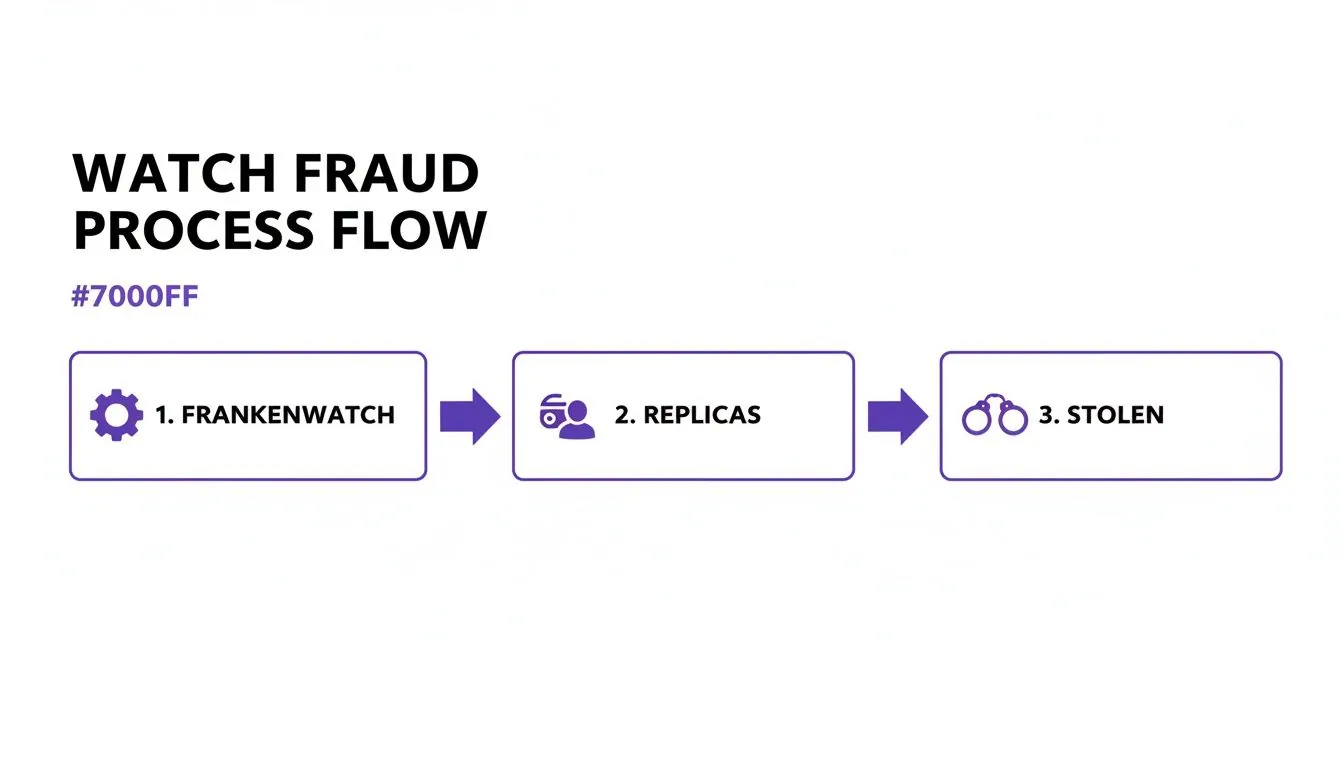 A process flow diagram illustrating watch fraud types: Frankenwatch, Replicas, and Stolen watches.
As you can see, the risks range from "Frankenwatches" pieced together from various parts to high-quality fakes and, of course, stolen goods. Each threat requires a sharp eye and a different verification strategy.
Step 1: Scrutinize the Seller
Your first move has nothing to do with the watch itself—it's all about the person or business on the other end of the screen. Put on your detective hat and start digging into their reputation.
- Check Feedback and History: You want to see a long, consistent track record of positive reviews, especially for other high-end items. A brand-new seller with zero feedback listing a five-figure watch? That's a huge red flag.
- Review Past Sales: Do they specialize in watches, or is their shop a random mix of electronics and old furniture? A dedicated watch seller is far more likely to have the expertise to describe a piece accurately and honestly.
- Ask Direct Questions: Don't be timid. Reach out and ask about the watch’s known history, its last service, and why they're selling it. A legitimate seller will be transparent and happy to answer.
If a seller is cagey, vague, or unresponsive, they're likely hiding something. Trust in the seller is the bedrock of any safe transaction. If that foundation is shaky, walk away.
Step 2: Analyze the Listing and Documentation
Next, it's time to zoom in on the listing itself. The quality and depth of the information they provide can tell you almost everything you need to know. You're looking for total transparency, not a slick sales pitch.
Insist on seeing high-resolution, unedited photos from every conceivable angle—dial, case back, clasp, crown, and the sides of the case. Blurry, dark, or minimal photos are a classic tactic for hiding scratches, dings, and other flaws.
The real prize here is the paperwork, what collectors call a "full set." This means the original box, warranty card, instruction manuals, and any service records. A warranty card with a serial number that matches the watch is one of the most powerful signs of authenticity you can get.
Step 3: The Critical Serial Number Check
This is it. The single most important step you will take. A watch's serial number is its unique fingerprint, and running it through a trusted database before you bid is absolutely non-negotiable.
This is where a dedicated service like StolenWatch becomes an essential tool for anyone serious about buying at online watch auctions. A quick search lets you instantly verify if a watch has been reported as lost or stolen anywhere in the world.
If a seller refuses to provide the serial number, that’s the biggest red flag of them all. End of story. Legitimate sellers know this is part of the game and expect the request. If they hesitate, make excuses, or flat-out refuse, walk away immediately. No "good deal" is worth that kind of risk.
Want to learn more about the finer points of this process? Our guide to what serial number lookup results mean explains how to act on a match, a near match or no record. By following this checklist, you stop being a hopeful bidder and become a truly informed buyer.
Using StolenWatch to Secure Your Purchase
<iframe width="100%" style="aspect-ratio: 16 / 9;" src="https://www.youtube.com/embed/l1vPDlnoBTw" frameborder="0" allow="autoplay; encrypted-media" allowfullscreen></iframe>All the due diligence in the world won’t help if you don't have the right tools for the job. Think of StolenWatch as your first and best line of defense when navigating watches auctions online. It’s not just a search bar; it's a community-powered shield designed to turn gut feelings and suspicion into hard facts.
Basically, it's a background check for your potential new watch. Before you part with your hard-earned money, a quick serial number search can give you the peace of mind you need to pull the trigger. The whole process is designed to be simple, giving you a clear "yes" or "no" on a watch's reported past.
How to Check a Serial Number Before You Buy
Running a check is dead simple. Once you have the serial number from the seller, you just pop it into the StolenWatch database, and the system does the rest.
- Request the Serial Number: Ask the seller for a clear, high-resolution photo showing the serial number on the watch case.
- Enter the Number: Type the complete serial number into the StolenWatch search tool.
- Review the Results: You'll get an instant notification if that watch has ever been reported stolen.
A clean result means you can bid with confidence. But if a red flag pops up, you’ve just saved yourself a world of financial pain and legal trouble.
Protecting Your Own Collection
StolenWatch isn’t just for buyers—it’s an essential tool for protecting the watches you already own. By registering your personal collection in the database, you create a permanent, verifiable record of ownership.
If the worst happens and one of your watches is stolen, you can flag it in the system immediately. This puts the entire global market on alert—from auction houses to local pawn shops—making it incredibly difficult for a thief to offload your timepiece.
The boom in online watch auctions is a global phenomenon. We’re seeing a huge surge in luxury watch auctions online, especially from new markets. In fact, demand from buyers in the GCC is expected to help push sales past the $1 billion mark by 2026.
Unfortunately, this global reach also makes it easier for thieves to launder stolen watches through anonymous online sales. That’s why routine serial checks are becoming non-negotiable for everyone in the industry—collectors, dealers, and even insurers. You can read more about these market predictions on WatchMaestro.com.
At the end of the day, using a service like StolenWatch is about creating a safer and more transparent community for everyone. It helps you protect your investments and ensures every transaction reinforces the integrity of the hobby we all love.
Common Questions About Online Watch Auctions
Even when you've done your homework, the world of online watch auctions can throw a few curveballs your way. Let's tackle some of the most common questions that pop up, addressing those real-world situations you're likely to encounter.
Think of this as your troubleshooting guide. From dealing with a secretive seller to figuring out what to do when a watch gets flagged, these answers will help you navigate the process with confidence.
What Should I Do If a Seller Refuses to Share the Serial Number?
This is one of the biggest red flags you'll ever see. A legitimate seller with nothing to hide knows that providing a serial number is a standard request from any serious buyer.
Your best bet is to be direct but polite. Explain that you need the full number to run a check for your own peace of mind or to get an insurance quote. If they still push back or make excuses, your course of action is simple: walk away from the deal immediately.
No discount is worth the risk of buying a stolen watch. The headaches—potential legal issues, a total loss of your money, and being blacklisted from official service centers—are just not worth it.
Are Watches from Major Auction Houses Always Safe to Buy?
Major auction houses have teams of experts and a reputation to protect, but even they aren't infallible. While they do a great job vetting pieces for authenticity and condition, stolen watches can slip through, especially if the theft was recent and hasn't been widely reported yet.
They use their own internal records and various databases, but you should never completely hand over your own security to someone else.
Think of it this way: the auction house provides a safety net, but you're still the one on the high wire. Running your own independent check on a platform like StolenWatch adds a crucial, personal layer of security. Treat every major purchase with the same level of diligence, no matter how prestigious the seller is.
I Found a Watch Is Listed as Stolen. What Are My Next Steps?
Discovering a watch is listed as stolen requires a measured and responsible response. What you do next depends entirely on whether you already own the watch.
- If you're still considering the purchase: Stop everything. Do not proceed with the transaction, and don't confront the seller, as they could be involved. Just quietly walk away.
- If you've already bought the watch: Your first call should be to your local law enforcement. Give them a copy of your StolenWatch report along with all your purchase records.
You should also inform the support team at StolenWatch about the situation. Full cooperation with the authorities is the only way to aid in the recovery process and stop that watch from being passed on to another unsuspecting buyer.
What Besides the Serial Number Should I Verify Before Bidding?
The serial number is a huge piece of the puzzle, but it's not the only piece. A thorough check involves looking at the seller's reputation, the paperwork, and the physical watch itself.
Before you even think about placing a bid, make sure you've covered these bases:
- Seller History: Dig into their profile. Look at reviews, ratings, and what they've sold in the past. Are they a new seller with a high-value item? Be extra cautious.
- High-Resolution Photos: Get your magnifying glass out, figuratively speaking. Scrutinize every detail. Do the hands, dial, bezel, and case look correct for that specific reference model?
- The "Full Set": Ask for clear photos of everything that comes with the watch—the box, warranty card, manuals, and any service papers. The warranty card is key, as it should have the serial and model numbers printed right on it, which you can cross-reference.
Having a complete "box and papers" set not only adds value but also makes a watch much harder to fake convincingly, giving you an extra layer of confidence.
Being proactive is the best way to protect your collection. At StolenWatch, we give you the tools to check a watch's history before you buy and to safeguard the timepieces you already own. Join our community of collectors who are committed to a more transparent and trustworthy market.
Check a serial number or register your collection today at StolenWatch
Related Articles
View all
How to Tell If a Watch Is Fake A Complete Guide
Learn how to tell if a watch is fake with our expert guide. We cover weight, serial numbers, movement, and dial details to help you spot counterfeits.
Your Definitive Guide to a Movado Serial Lookup
Unlock the secrets of your watch with our guide to a Movado serial lookup. Learn how to verify authenticity, check for theft, and understand your timepiece.
Your Guide to Watch Serial Numbers and Theft Prevention
Learn how watch serial numbers protect your timepiece. Our guide covers how to find, check, and register them to prevent theft and authenticate your collection.